Sunday, March 29, 2015

Trees for the future

I have been contemplating how best to use some money that I received for my birthday, and what I decided on was to purchase some fruit and nut trees for our property.  Trees in and of themselves aren't really necessary, because our one acre is almost entirely wooded, with native species. We also have two plum trees, one that produces dark purple plums and one that grows plums that are peachy-blush in colour.

I think that fruit and nut trees are a really great investment in a property, and one that I've been waiting to make until I was living in a place that I knew I would want to stay.  The idea of having a fresh harvest of our own organic fruit each year is a beautiful one, and I love the idea of being able to trade or share our bounty with others.  As a result, I've been trying to decide on varieties that are less frequently seen in our area.  Things that are a little unusual will be fun for us to try, and I also think they may be more desirable to trade.  I'd love to see more of a barter economy here on PEI, where we can share and trade our own goods with those of others. (Too bad you aren't living here, Jackie, or I would definitely be trading you fruit for your honey when you get it flowing!) Food security is very important to me too, and a perennial crop of nutritious food that is a source of vitamins and protein and good fats seems like a good idea.

So I found a nursery in Ontario that will ship to us in the spring, and I just submitted my order, which I am really excited about!

It was a little pricey but I think trees are a wonderful way to keep giving back to our family year after year.  So really, it's the birthday gift that I will receive every year, for the rest of our years here on this homestead!

I have been looking for a Canadian supplier of pawpaws, and while there are a few, the other two I contacted didn't respond.  I can't wait to see how these turn out, never having eaten a pawpaw in my life! They're supposed to be like a cross between a banana and a mango with a very tropical scent and taste but they can grow in our zone 5b climate.  They are supposed to be anti-carcinogenic and amazing sources of vitamins and minerals.  I'm intrigued!

Photo of pawpaws on a tree. I also fully intend to sing to my children, particularly the youngest, about being "way down yonder in the pawpaw patch".  If I'm honest, that might be a strong reason for choosing this fruit!

I was also thrilled to find a pecan variety that is hardy in our area.  This is by far our favourite type of nut so I ordered two for what will hopefully one day be a decent crop. We have native hazelnuts in our area but I have never seen the fruit at maturity and I assume they all get devoured by wildlife before most humans have the privilege of tasting them.  So I ordered two hazelnuts as well that I hope to plant near our house and keep under a watchful eye.

Finally, as a treat, I got a small Natalina fig tree to grow in a container. I think that indoor fig trees are beautiful anyway, but if one day I'm blessed enough to taste a fig from my own tree, it will be a truly wonderful thing and a reminder of my time in my beloved Italy.

I also have plans for multi-graft apples and pears, hardy kiwi, and a lot of berry bushes.  I'm not sure how many I can get in this year, but I wanted to start with the trees because you really can't plant them early enough and I'd love to see a little return from them, at least a few of them, in the next five years or so.  I'll update as my darling seedlings arrive!

What are you planting this year to promote food security for your family?

Monday, March 23, 2015

Planning for Planting

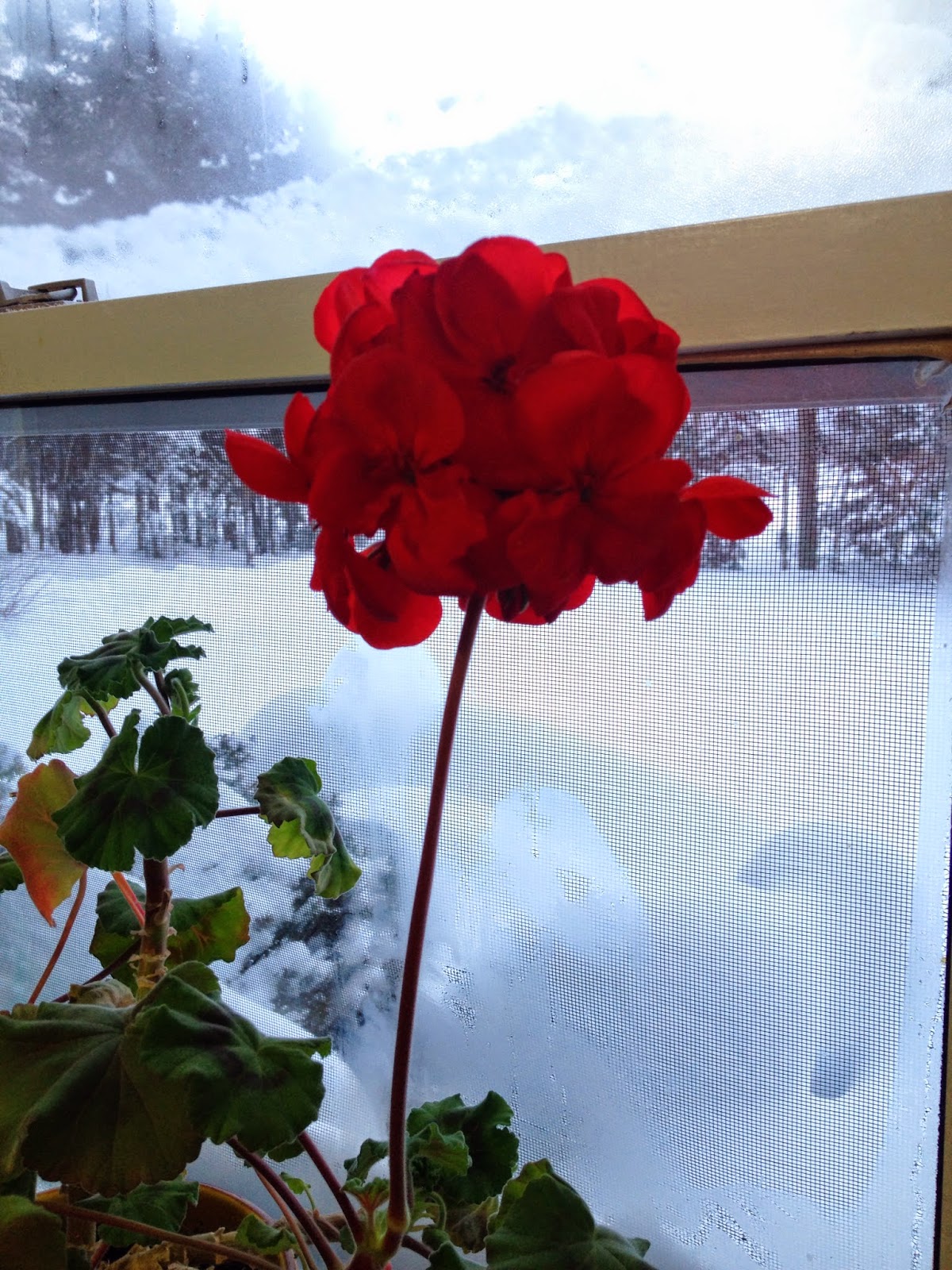
Yesterday's snowfall was absolutely beautiful, seen here in the early morning before the high winds started blowing snow around and causing major whiteouts.

In this never-ending winter of massive snowfalls and school cancellations, it's hard to believe that we have already passed the first day of spring!  But we have. And so this weekend, I realized it was time to get myself organized and write out a seed planting list so I'll know when to plant which seeds. Here's the plan:

Seed planting schedule, 2015

Veseys lists our final frost date as May 15th. They are the gardening specialists, but I think that May 15th is entirely too optimistic. I've based my seed starting on a tentative final frost date of May 30th, and I still think that transplanted seedlings will need some added protection until at least June 2nd, which is the first full moon in June.  I was brought up with that as the key factor in deciding when to plant more tender annuals.  Luckily, this year it's early!  When it's near the end of the month I can't really abide by it.

Seed starting dates organized by number of weeks before final frost date that they should be started.
 You may notice that I don't have any root crops on the list. I love carrots and beets, for example, but since I'm hoping to do some lasagne gardening this year and didn't start my beds last fall, I want to give them time to break down and improve soil quality before sticking root crops in there. I'm still part of my incredible veggie CSA so will lean on those root veggies this year!


Planting tray plans with numbers of each variety.

I might have been a little overzealous when I bought the seed starting trays that I'll be using this year.  I bought them because they have deep, hexagonal cells that I hope will meet the seedlings' needs until it's time to transplant outside. I'd like to skip the transplanting into a slightly bigger pot step.  However, these trays are for the pros and have 72 cells per tray.  I do not need that many! I may give a few seedlings to my dad, since he's planning to put a raised bed out at their cottage this summer, and I hope I can squeeze the rest in somewhere.  Especially the tomatoes!

Just a glimpse of some of our seed packets for this year.
 I have a few seed packages from last year and a few that I bought new this year.  Most of my seeds came from Heritage Harvest Seed in Manitoba, and they even threw in a free package of parsley which was nice.  Some are from Veseys, some from the Halifax Seed Company, and some from Burpee.  We'll see how they all do!

My schedule, drawn up on Saturday, reprinted in good copy yesterday, tells me that I need to plant my lavender now.  So I had better get on that.

Wednesday, March 18, 2015

Buried under snow, but still here!

I have been quiet on this front the past week or so, but our days have been full...


This beautiful boy turned six on Monday!

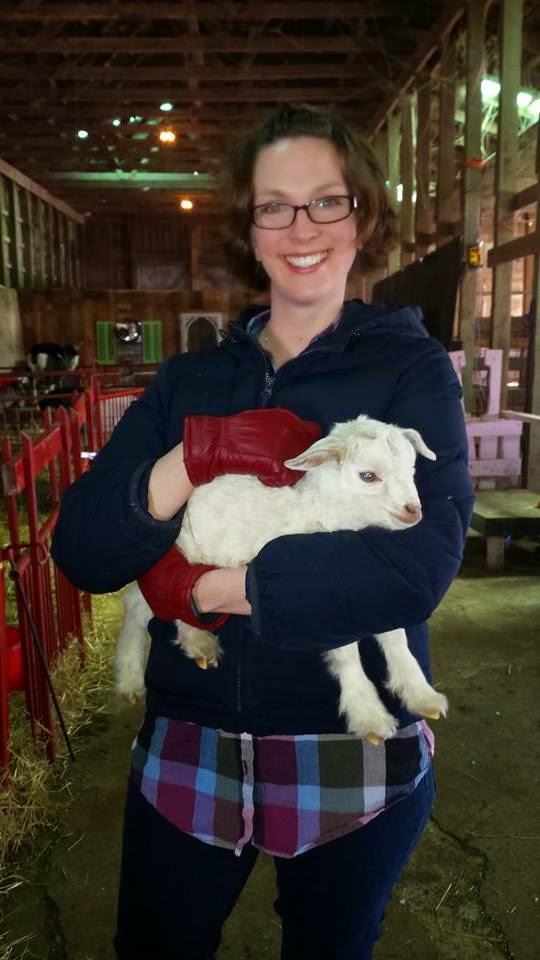
So his birthday celebrations naturally had to include time at a farm, which means time for his mum to snuggle goat babies!


With two more snowstorms this week, we are desperately trying to find spring where we can.


But the snow doesn't interfere with the enjoyment of the outdoors, in fact, it might have made it even better with 6 foot drifts to jump into from the trees!  (And yes, I know my children are standing on twigs, not branches, but luckily they're not heavy enough yet for disaster to ensue...)

The snow also didn't interfere with lots of baby snuggles, especially during bum change time. :)
Forgive the photo quality. Until my beloved has more free time on his hands, I'll be using photos taken with our cell phone, and for those of you that know me, I have shaky hands. But at least it's a glimpse into the beauty of our days!

Monday, March 9, 2015

Application is in, and hopefully being considered!

Last week I went to a public town meeting regarding development on a neighbouring property, and while I was there, I had the opportunity to speak once again to the planning officer for our town, as well as to the mayor.  It was a perfect opportunity to quickly chat about our hopes for our property.

I had already delivered letters to our two adjacent neighbours explaining what we hope to do, which at this point, is to amend the zoning bylaws to allow for the keeping of chickens and small goats for personal use. I included a fact sheet for each chickens and goats, and gave them four ways to get in touch with me should they have any questions or concerns (and asked them to please do so). The night of the public meeting was one week after my delivery of the letters, and there had been no response, so we decided to move ahead with the application.  This was just in time, since at the meeting, the planning officer told me that planning board would be meeting today and that if I wanted to have the matter tabled, I would need to get my application in by Friday at noon.

An excerpt from my planning board letter


No problem!  All I needed to start the ball rolling at this point was a letter of intent, so I whipped one up right away.  The planning officer also told me that were I able to find an example of zoning bylaws that permit the keeping of small livestock which could be easily inserted into our existing bylaws, that would make it easier if this should be voted to go ahead.  A lot of the bylaws that I came upon were more related to animal control, but Seattle's bylaws deal with zoning and they seemed very reasonable to me, with parameters that would work well for the property owner and for the municipality.  I tidied up the look of them in a Word document, included the link to the bylaws, the document including the section relevant to our application, a pdf explaining the bylaws that could be useful in advising the public, and sent it all off--by email last Thursday, and dropping off a paper copy Friday morning.

Today the planning board met and the application will have hopefully been tabled.  Before any decisions can be made, we will have to have a public meeting.  I prefer this way, as it gives those with questions an opportunity to ask them and I would like to be able to answer in more detail. I don't know when I'll hear what the preliminary response to the application was like, but I will contact the planning officer in a few days if I don't hear anything.

I'm so hopeful that this will work out.  Please keep this in your thoughts, as it is a very important process for me!

Tuesday, March 3, 2015

A little goat love in the winter

This winter has been getting long. There have been so many school cancellations and although the sheer quantity of snow makes for great play opportunities, the wind chill sometimes makes it a little less fun to stay out of doors. One way we've been beating cabin fever is by going to a friend's awesome farm to spend time with some of her animals.  Island Hill Farm has a lot more than goats, but I had to be hands-free during the baby bunny cuddle time to make sure that our children handled them properly; likewise for the cats. The alpacas, pigs, ducks, chickens, donkey and horse are all sweet too, but the only animals I got a chance to photograph the kids with were the goats.

Besides, those are the most important animals there in my opinion! As someone who is slowly pining away for a couple of little backyard does, it does my heart good to spend some time with these ones and it helps tide me over.

Forgive the photo quality, I just had my phone with me. My husband is the family photographer and he isn't always around to document the fun!


This boy actually says that one of his favourite things in the world is "goat snuggles".

I am learning just how much like a goat she actually is--sweet but a bit naughty, getting into trouble and making me laugh all at once.

The sunshine on the straw makes for a cozy place to curl up with a friend.

He loved that this little pygmy was pawing him on the leg; I personally fell in love with that Nubian.

This about sums up my two children right here.  Gentle and calm on the right, wild and wonderful on the left.

Friday, February 27, 2015

Permaculture possibilities

Permaculture is something that has interested me for some time. To be honest, though, I found that a lot of the definitions that I was coming across in my reading were vague and left me feeling a little cloudy on the whole subject.  It seems that permaculture experts don't want to pin it down as any one thing, such as a gardening philosophy, and so there aren't many concise, clear explanations.

To sum up my understanding of it (at least as it makes sense and is useful to me!), the idea of permaculture revolves around designing agricultural systems that serve human needs while mimicking ecological systems found in nature.  In other words, while our garden and property will certainly be home to species not naturally found in PEI, they will work together as a community, forming a web of interactions that promotes harmony and allows each plant or animal to play multiple roles (e.g. a plum tree can provide shade, produce blossoms that feed pollinators and plums that feed us, slow the evaporation of moisture from the soil, serve as shelter to songbirds, etc.).  It is difficult to imagine a system that is really as self sufficient and sustainable as even the simplest natural community, but even using this premise as a guideline seems like a solid starting point.

This kind of harmonious gardening appeals to me greatly, so I have been reserving books at our local library that will teach me more about how to properly design this sort of system.  The first one that I borrowed was absolutely awful.  I became a bit skeptical about the whole thing and then I got this book out of the library: Gaia's Garden: A Guide to Home-Scale Permaculture.

This book, by Toby Hemenway, is an excellent primer on permaculture and designing your garden to enhance your environment in order to provide food, habitat, beauty and enjoyment.
I loved reading this book.  The author lives in California, so some of the plant suggestions aren't applicable to our zone 5b climate, but all in all, I really enjoy the way he has laid out this book and there are some very usable suggestions in it.

One thing that bothers me when reading about permaculture is all of the forest gardening information.  It's not that I don't think forest gardening is great, but our property is almost entirely wooded!  The little area where I have sun will most certainly not be planted in huge perennial shrubs and fruit trees that will eventually shade out everything else, thank you very much!  Finding information about gardening in the forest, however, is much more difficult.  This book has a few suggestions that might work for growing edibles in the woods, however, and some of the information about planting forest guilds lends itself to translation into planting in the woods.  It also has good ideas to add to the companion planting and sheet mulching I already plan to do in our annual beds.

What I found most helpful though were the space-saving garden design tips, such as this one:

Using keyhole beds (without the central compost tunnel) allows small spaces to be used much more efficiently, eliminating much of the necessary walkway space and freeing it up for use for planting.

This image of a yard planted with interconnected keyhole beds captivated me.  Our front yard (the south side of our home) is currently an adorable little rounded green lawn, surrounded by a thick border of perennials.  My first objective is to turn the perennial border into an edible border, made up of annual veggie and flower beds, fruiting shrubs, and areas where perennial veggies such as asparagus can be planted.  However, if I can convince my lovely husband to eventually give up the front lawn, this design would be a way I could maximize the sunshine in a beautiful way.  Each of the keyholes seems like an exciting, secret little place to visit and the thought that they'd be filled with sugar pumpkins and flowers and berries and tomatoes makes them seem all the more magical.  I imagine putting bird baths and little sculptures and fairy houses throughout as well, with bean teepees and sunflower forts and things that my kids would find enticing.  I love this.

Additionally, in the section on water conservation, I loved one of the ideas that he highlighted regarding greywater use.  Our house is a little curious, because although we are on municipal sewer, we get our water from a well.  So we pull water up out of the ground, but none of the water we use gets treated and then returned to our soil--it gets pumped off to the municipal treatment plant.  This doesn't sit overly well with me, and so I had been wondering about a way to use greywater--the used water that comes from showers and sinks and tubs and washing machines, but not the nasty toilet water (or blackwater).  I knew that you couldn't use the water directly on vegetable beds, but irrigation seemed like the best use of it so how would that work?  I don't want a lawn to water.  I want tomatoes and strawberries.

When I saw this, I thought, "Yes."

My dream greywater system.
The used water comes out of the house, goes first to a submerged gravel cleansing marsh stocked full of native wetland plants that can use the slightly grotty water and that are home to the bacteria that will cleanse it, then it goes through a series of tiny little ponds where the water becomes even cleaner until it ends up in a slightly larger one that could be used for ducks.  I'm not keen on koi, but even providing habitat for local frogs would be lovely!  Then I could dip my bucket into the final pond and use it for watering as well as habitat.  The system would have to be very small, but the enhancement to the yard and the re-use and return to the soil of previously-used water is very attractive.

These are the two main new concepts that I got from this book, and there are a lot of other great tidbits in there, particularly for those who have a larger property that we do.  I'd really recommend it for any gardener to read, but especially for those who would like to garden in a more nature-inspired manner.

What ways do you derive inspiration from nature in your garden planning?

Monday, February 23, 2015

Organic grains come to Invercauld

*Warning: my nerdy science past may come out to play in this post.*

Although I love my planet and I care deeply about the health of our family, I don't always buy organic. I know that I should, but I don't.  Supporting organic farmers is very important to me, but I often make my purchasing decisions based on budget and not my values.  One thing that I was consistently not buying organic was grain products, most specifically, flour. We don't have a flour mill on PEI, but there is an organic grain mill in Woodstock, NB, which is about 415 km from where I live.  Maybe not close enough to qualify for the 100 mile diet, but when you think about it, in Canada that isn't really a huge distance is it?


I was added to a bulk buying group for that company about a year ago but I stalled on putting in orders.  The pickup was a bit of a hike from our old home, and the price, while reasonable, was a little high for my slim student/mother budget.  I meant to put in an order, but I just didn't, for the time being.

Then I started to read articles, on blogs, mostly, about the spraying of glyphosate on wheat crops just before harvest.  I didn't relish the idea of a fresh dose of Round-Up on my wheat just prior to being turned into flour, and I hoped that since this was information from the blogging world (which we all know is full of scientific hogwash) and from the US (I like to pretend to myself that we make better choices in Canada, which is a bit of a fairy tale in so many ways!) that it probably wasn't an issue here.  I started to look into it and found this link from the University of Saskatchewan regarding the pre-harvest application of glyphosate to wheat crops.  I take the word of a university in the wheat capital of Canada as fairly solid when it comes to how crops are grown.  The government of Saskatchewan also notes this as a common practice on its website, and explains when and how to apply it.


I understand that weeds are annoying and problematic, far more so for a large crop of one species than for a small diverse garden, so I don't want to vilify those who use federally regulated substances.  Farmers are just trying to make their living, after all, and I believe that they care about the soil that they tend.  However, I don't really trust the regulating bodies or the pressure that big pesticide and processing corporations can exert on governments and farmers.  I also don't trust non peer-reviewed articles.  So I tried to look a little harder at the issue, and while I haven't conducted any major research, I easily dug up a few articles from peer-reviewed journals containing studies that showed that there are concerns for human health related to the use of glyphosate.

It isn't even so much the glyphosate, but the chemicals that are added to it to improve its function that are the problem.  These studies show that the adjuvants (or added components) can make the glyphosate accumulate in human tissues more easilycan harm placental, embryonic and liver cells, and act as endocrine disruptors (mess up hormone function) at levels lower than those used agriculturally.  These studies came out of France, which isn't surprising since Europeans are far more conservative with their regulation of pesticide products and their use in crop production and are likely making more of an effort to study the harm that these substances can do.

I think scientists need to look at these effects more conclusively over the long term, but this reading is enough for me to decide to exclusively purchase organic grains from now on.  In our world we come into contact every day with things that can harm our health.  We can't worry about it too much, I don't think, because we have to just live, and an over-thinker like me can end up with major bouts of anxiety!  But we can take steps where possible to minimize our exposure to things that can harm us, and in particular, our little ones.

So all this to say, I was super excited to scoot out to the country, to the hills where I was raised, to pick up my first (finally!) order of local-ish, organic grains today, and I'm even more excited to begin baking with them!

I promise the next post will be more fun.  I just felt I had to explain my lengthy decision-making process.  I can be long-winded like that.  Sorry!